After LASIK Eye Surgery: Recovery Tips & What to Expect
Dec 12, 2025

Imagine waking up and seeing the world in sharp, crystal-clear focus — without reaching for your glasses.
That’s the life-changing promise of LASIK. But achieving that perfect vision isn’t just about the procedure itself — it’s about what happens after.
Your post-LASIK recovery plays a major role in how well your eyes heal and how quickly you enjoy your new vision. And while the surgery is remarkably quick, the healing that follows is a gradual, steady journey.
In this guide, you’ll learn exactly what to expect in the hours after your procedure, what’s normal during the first few days, and the long-term habits that help protect your eyes — ensuring your investment in lifelong clear vision truly pays off.
What to Expect Immediately After LASIK Surgery (The First 24–48 Hours)
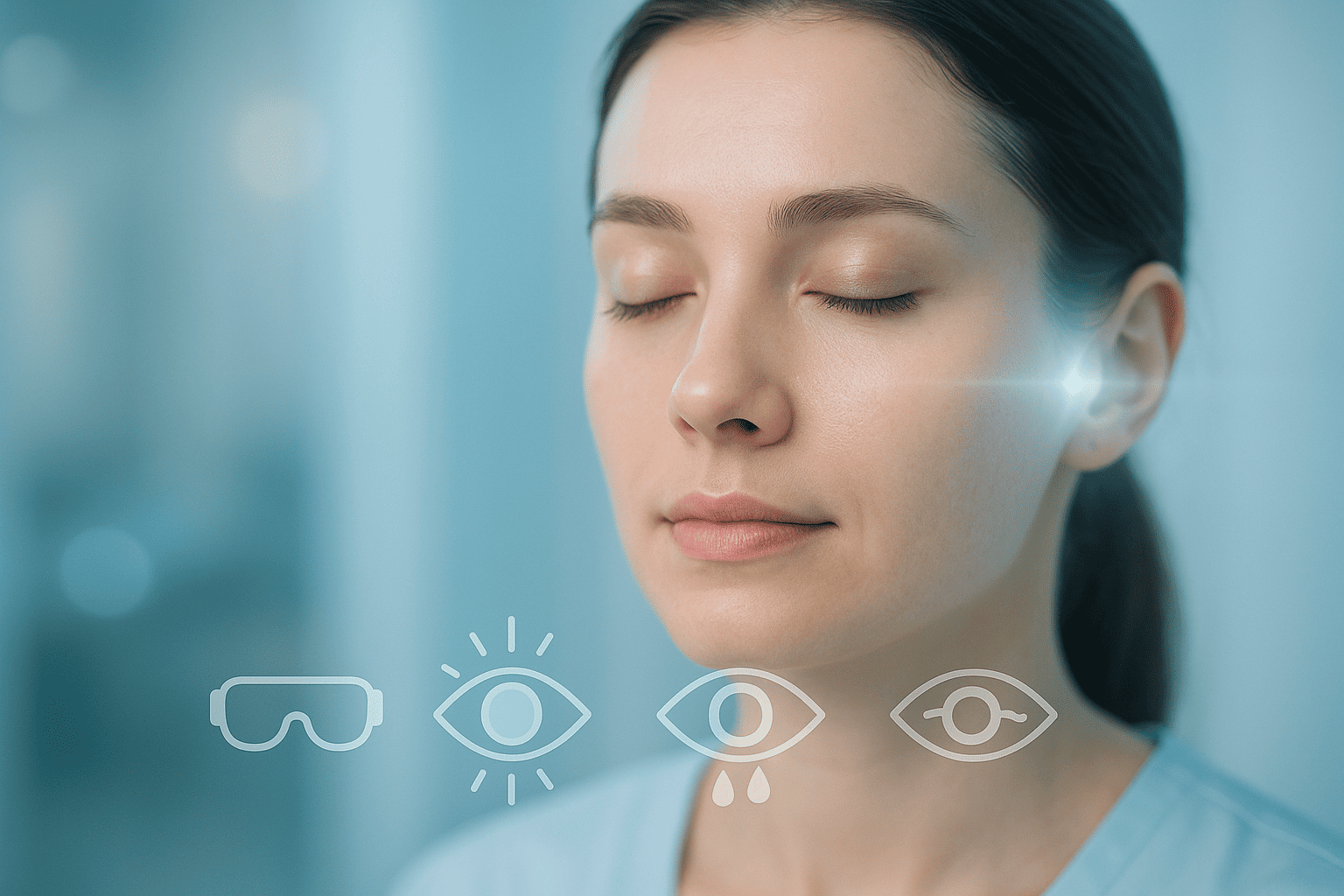
The first day after LASIK is crucial for healing. You may experience blurry vision, light sensitivity, a gritty sensation, watery eyes, or mild discomfort—these are completely normal. Your eyes need time to adjust after the correction, so your main focus should be on protecting the corneal flap and managing these early symptoms.
Essential Checklist for the First 48 Hours
Prioritize Rest: During the first 4–6 hours after LASIK, your eyes need time to settle and begin healing. While it’s helpful to rest, you don’t have to keep your eyes fully closed the entire time.
Instead, focus on:
- Blinking regularly to keep your eyes naturally lubricated
- Reducing near work such as reading or detailed visual tasks
- Avoiding screens like phones, laptops, and TV, which can cause dryness and strain
- Keeping your visual activity light so the corneal flap can adhere properly
This gentle approach reduces eye strain and supports smooth early healing without making patients feel they must keep their eyes closed continuously.
Use Medicated Drops as Directed: You will be sent home with prescription antibiotic and anti-inflammatory eye drops. The antibiotic is essential to prevent infection, while the anti-inflammatory drop reduces swelling and promotes comfort. Use them exactly on the schedule provided, even if your vision feels fine. Wash your hands thoroughly before each application.
Wear Protective Shields: You will be given clear, plastic shields to wear over your eyes while sleeping. These are non-negotiable for the first few nights. They prevent you from accidentally rubbing or pressing on your eyes during sleep, which could dislodge the flap.
Absolutely Avoid Rubbing Your Eyes: The corneal flap is delicately repositioned and is healing. Rubbing your eyes, even gently, can wrinkle, shift, or dislodge this flap, leading to complications that may require further intervention. If you feel an urge to rub, use preservative-free artificial tears instead to relieve itchiness or dryness.
Skip Strenuous Activities: Any activity that strains your body can increase pressure in your eyes. Avoid heavy lifting, strenuous exercise, bending over at the waist, and any sudden, jerky movements. This precaution helps ensure the flap remains stable and undisturbed.
The First Week: Settling Into Your New Vision
Your vision will continue to improve during the first week, although mild fluctuations are normal. Keep following your surgeon’s instructions to ensure smooth healing.
- Continue Your Eye Drops: Use your prescribed drops as directed and incorporate preservative-free artificial tears frequently to manage dryness.
- Wear Sunglasses Outdoors: Protect your eyes from UV light and dust by wearing 100% UV-protection sunglasses whenever you are outside.
- Avoid Eye Makeup and Lotions: Skip all eye cosmetics, creams, and lotions around the eye area for at least a week to prevent irritation or infection.
- Prevent Water Exposure: Keep water away from your eyes—avoid swimming pools, hot tubs, and be cautious while showering or washing your face.
- Practice Smart Screen Use: Ease back into using digital devices and follow the 20-20-20 rule: every 20 minutes, look at something 20 feet away for 20 seconds to reduce eye strain and dryness.
Long-Term Care for Lifelong Vision Health

Your commitment to eye health doesn't end after the first month. Adopting healthy long-term habits helps preserve your crisp vision and maintain overall eye comfort for decades to come.
- Stay Hydrated: Drinking plenty of water supports healthy tear production, which helps reduce dryness.
- Eat a Vision-Healthy Diet: Incorporate eye-friendly foods rich in Omega-3s, antioxidants, and vitamins to nourish your eyes from within.
- Attend Follow-Up Appointments: Keep all scheduled check-ups so your surgeon can monitor your healing progress and detect any potential issues early.
- Use Protective Eyewear: Make it a habit to wear sunglasses outdoors and use safety glasses during sports or activities with a risk of impact or debris.
Conclusion: Your Vision Matters
The journey to crystal-clear vision is a partnership between you and your eye care team. Following these recovery guidelines is the best way to ensure you achieve the best possible, long-lasting results from your LASIK procedure.
At Sri Eye Care, your vision and recovery are our top priorities. We are committed to providing not only the best LASIK surgery in Bangalore but also compassionate, attentive aftercare to support you through every stage of healing. Our team is dedicated to ensuring your experience is positive from consultation to full recovery and beyond.
If you have any questions during your recovery—no matter how small—we are always here to help.
Ready to experience the life-changing benefits of clearer vision? Schedule your LASIK consultation in Bangalore at Sri Eye Care today and take the first step toward a glasses-free life.
Book Your Consultation Now
📞 Call: 080-6821-2807 | Visit www.srieyecarehospital.com
Recent Posts